
Some places announce themselves the second you arrive. They demand awe. They flex their beauty and dare you not to look.
The Inland Northwest doesn’t do that.
It doesn’t grab you by the throat. It doesn’t perform. It waits. And if you’re paying attention, it begins to show itself slowly, deliberately and without apology.
I didn’t fall in love with this place at first sight. I earned it.

From rugged shores to wild interior
I’ve lived in five Canadian provinces, each one stunning in its own right.
Nova Scotia’s rolling highlands.
Prince Edward Island’s Great Red Mud.
Newfoundland’s rugged shores.
British Columbia’s wild interior.
And Alberta’s Rocky Mountains – dramatic, imposing and impossible to ignore.
The Rockies are an unfair comparison, of course. They don’t whisper. They roar.

The Inland Northwest doesn’t try to compete with that kind of spectacle. It doesn’t need to. This place is quieter, more restrained and more interested in whether you’ll slow down enough to notice it.
Following love, finding home
I came here for love. The human kind. The leap-of-faith kind. I followed a man south and landed in a landscape that didn’t immediately try to win me over.
So Bella and I started walking.
We wandered trails without expectations. We let our nervous systems recalibrate. I learned that this place reveals itself only after you stop demanding something from it.
I learned where the light stretches wide at Turnbull National Wildlife Refuge, where wetlands, grasses and sky create room to roam and room to disappear into the woods.
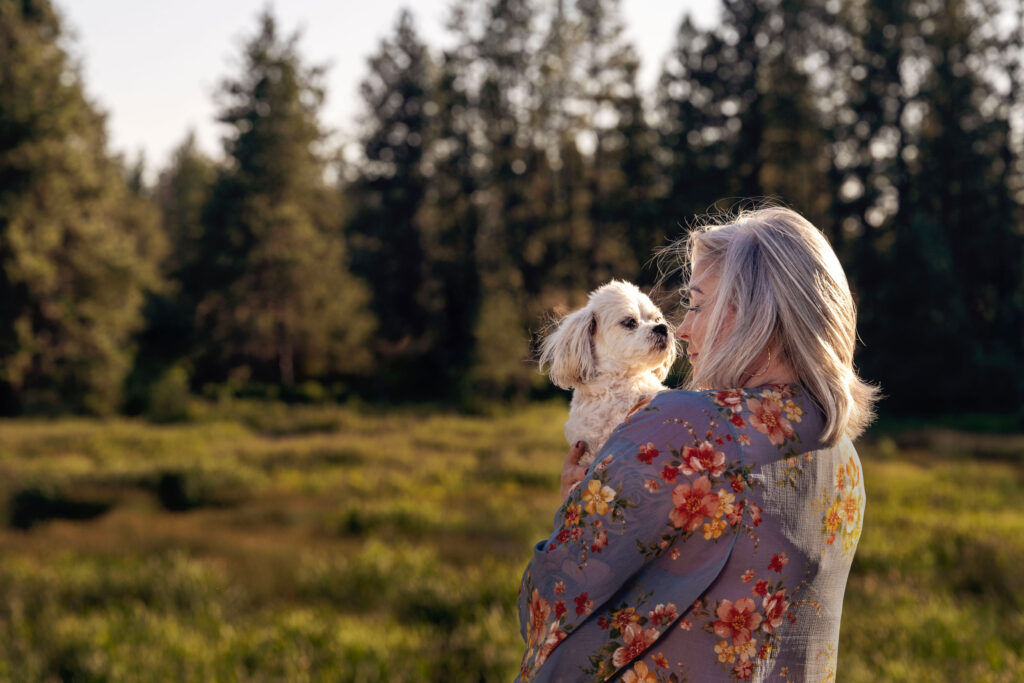
I learned how stillness settles in at Farragut State Park, a piece of paradise dropped into North Idaho, a pristine lake backdropped by the Selkirks, where the water pools and dogs rejoice in play.
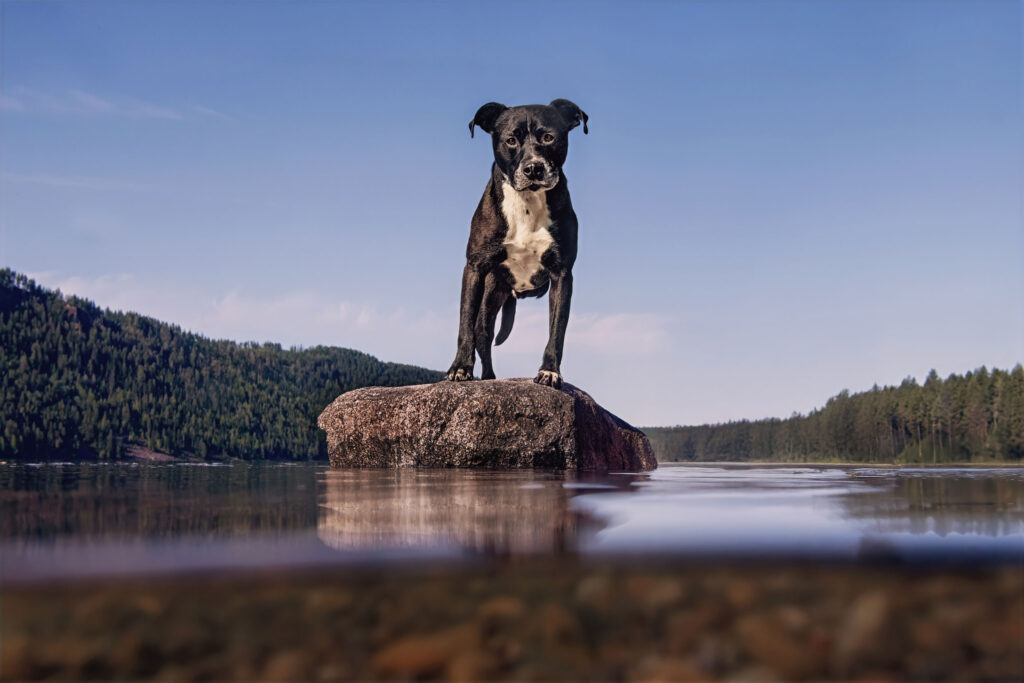
I learned the rhythm of easy mornings at Black Bay Park in Post Falls, where the big waterhole begs for energy and wide eyes.
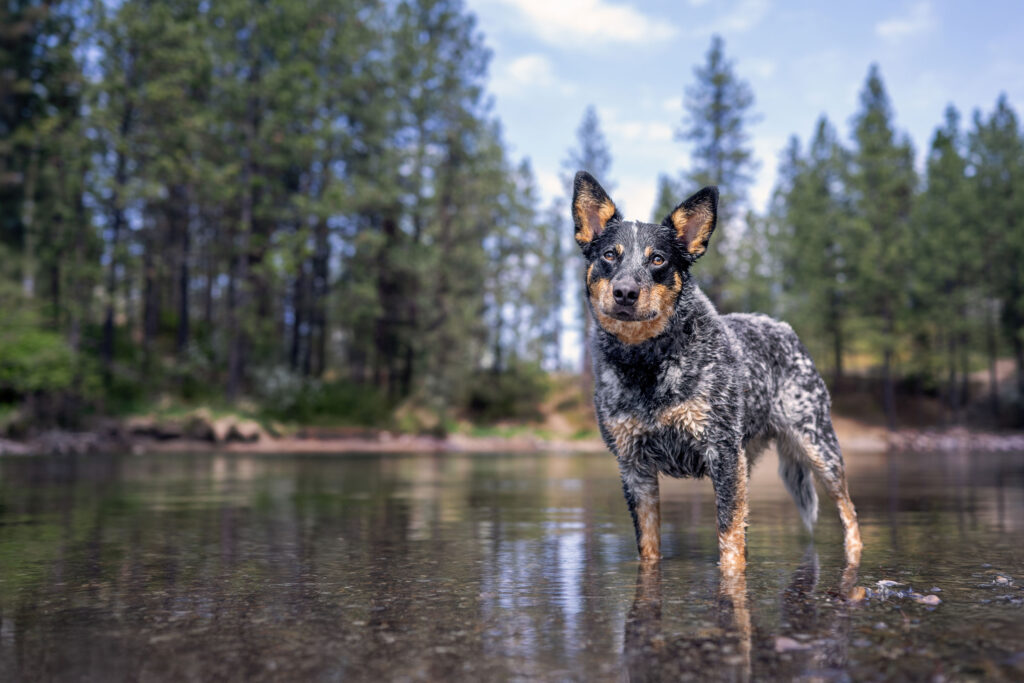
I learned how breath slows at Hauser Lake, where the Selkirk Mountains behind it ask nothing more than that you show up.
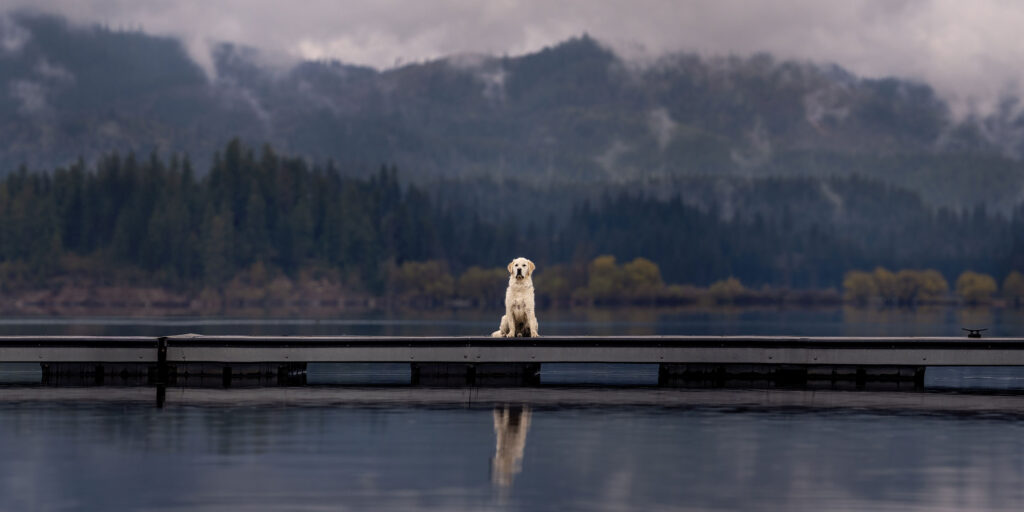
I learned to let Mount Spokane set the terms. It makes you work for it. The trails decide the pace.
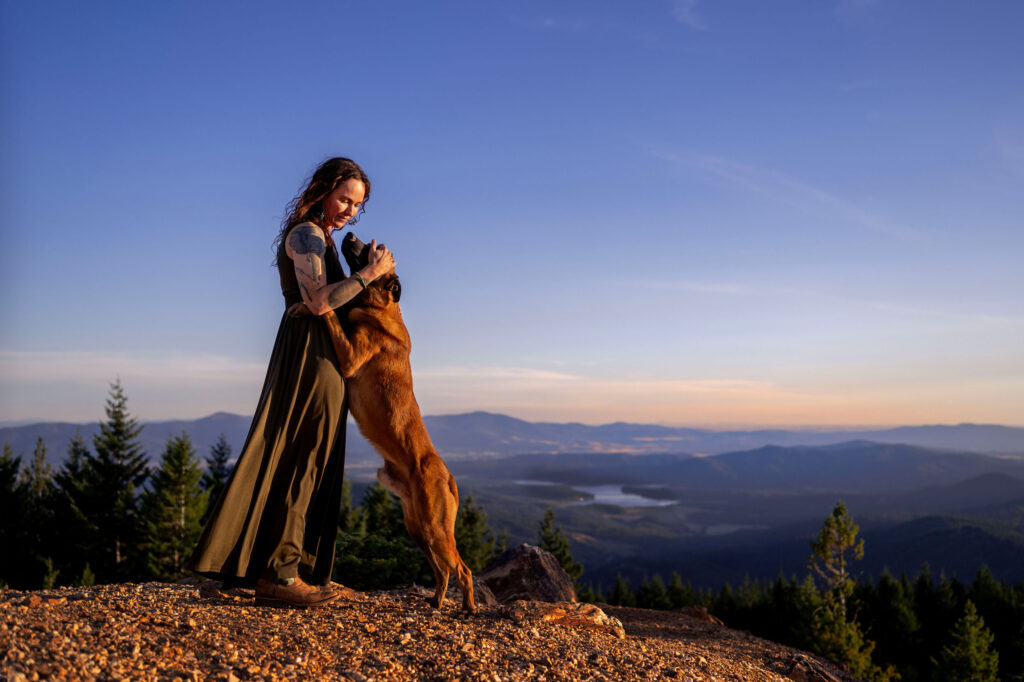
And Bella and I bonded. In ways we never would if we were simply walking around our neighborhood. Trust is built in the wild.
Your dog understands this place immediately
Your dog doesn’t need drama. Or grandeur. Or a location that performs.
Your dog needs ground under their feet. Water they can bound into. Space to move at their own pace and follow their nose wherever it leads.
That’s why dogs understand the Inland Northwest before we do.
I see it in every session. Dogs slow down at Turnbull, loosen up at Farragut, light up at Black Bay’s big waterhole and settle into the easy rhythm of Hauser, moving differently when the land gives them permission.
This place doesn’t ask your dog to perform. It allows them to be exactly who they are.

I don’t choose locations because they’re impressive. I choose them because they give dogs room to show up honestly.
The Inland Northwest isn’t scenery in my work. It’s a partner.
When I photograph your dog here, I’m not chasing spectacle. I’m honoring the relationship between your dog and the land they love.
I’m letting dogs be dogs. Because to dog is to be exactly who you are, without apology.
A quieter kind of belonging
Some places, like Lake Louise in the Rocky Mountains, ruin you by being so beautiful you can never unsee them.
Others, like Hauser and Farragut, ruin you because they teach you how to belong.
The Inland Northwest belongs to people who listen. To those who return again and again. To those who stop chasing the next big moment and start paying attention to the one they’re already in.
It’s not flashy. It’s weathered. It’s honest.
And it’s where I love photographing dogs.


